How to Measure Your Motorhome for an Air Awning or Privacy Room
Your complete guide to choosing the perfect Air Awning for your Motorhome.
Adding an air awning or privacy room to your motorhome can dramatically enhance your outdoor living experience. Whether you’re looking for extra space, shelter from the elements, or a bit more privacy, choosing the right awning starts with accurate measurements and understanding how it attaches to your vehicle. This guide covers everything you need to know.
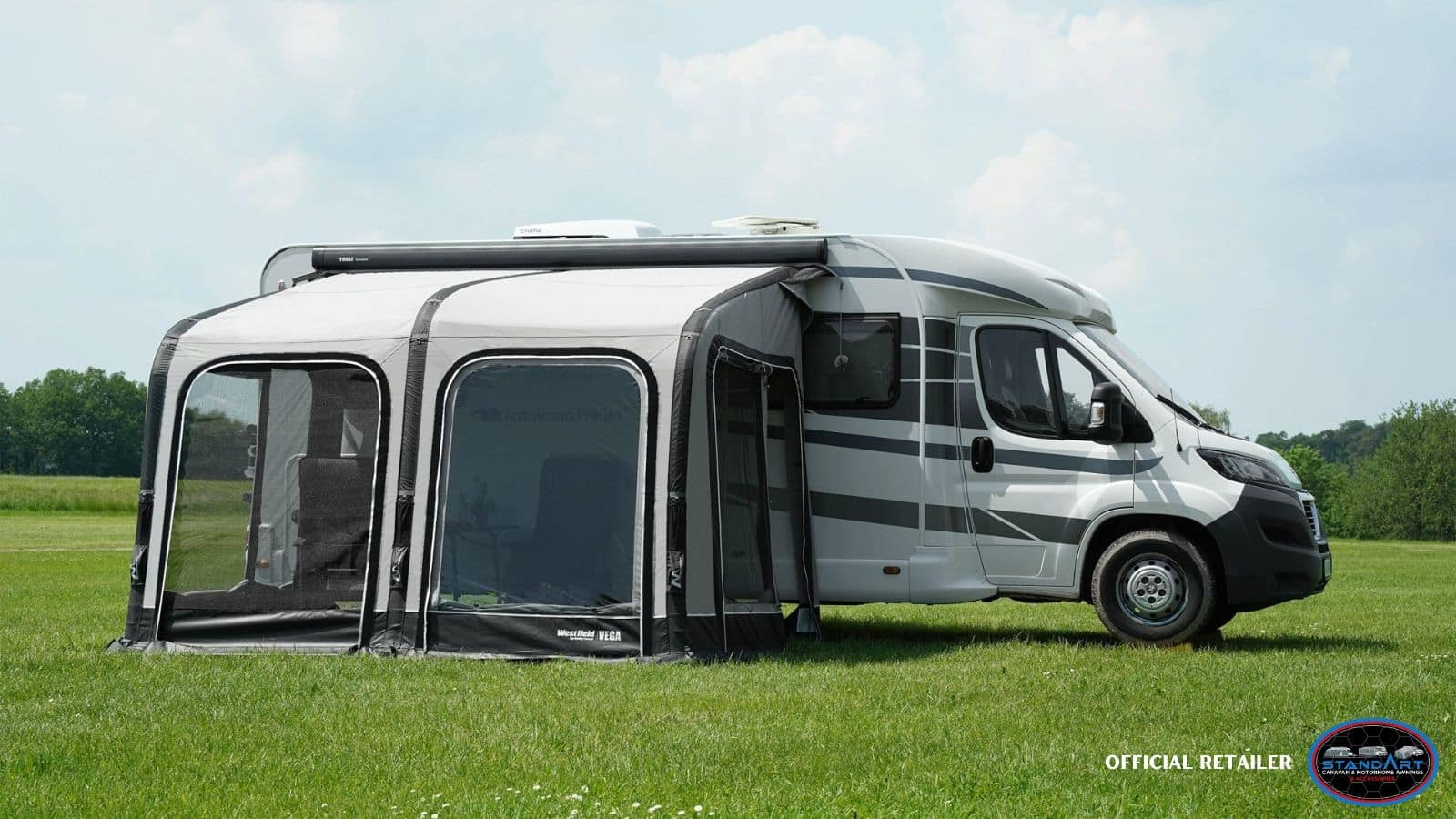
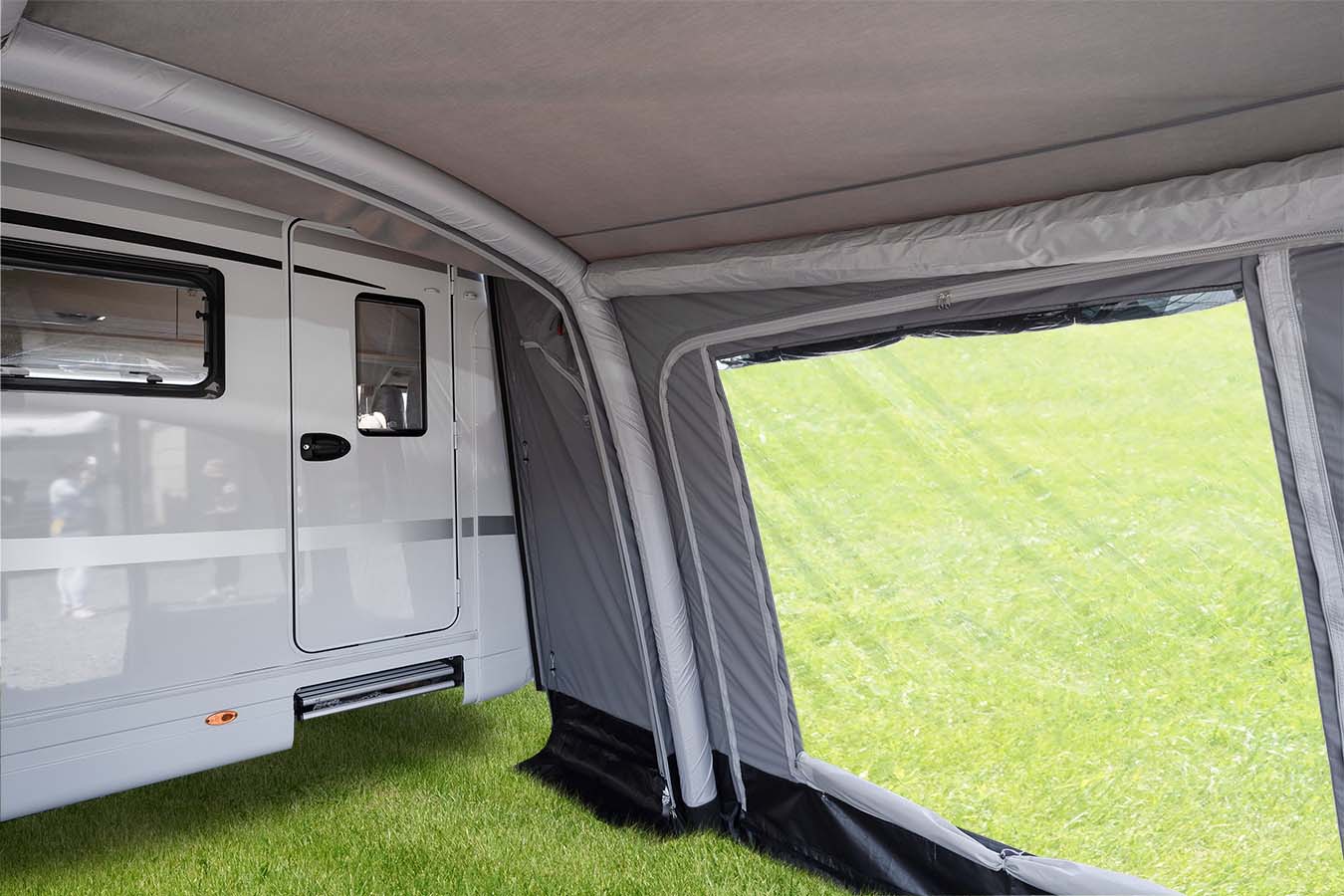
Static awnings and privacy rooms are designed to stay permanently fixed on to your vehicle when in use. Offering a snug fit, these awning are designed to remain attached to your motorhome while parked. The weather-resistant seal , superior fit and are ideal for longer stays at campsites.
Drive away awnings, allow you to effortlessly detach your motorhome leaving the awning free standing on the campsite. Perfect for touring, they provide flexibility and convenience, allowing you to still use your vehicle, without the need to pack all the gear up.
Attachment Methods – everything you need to know.
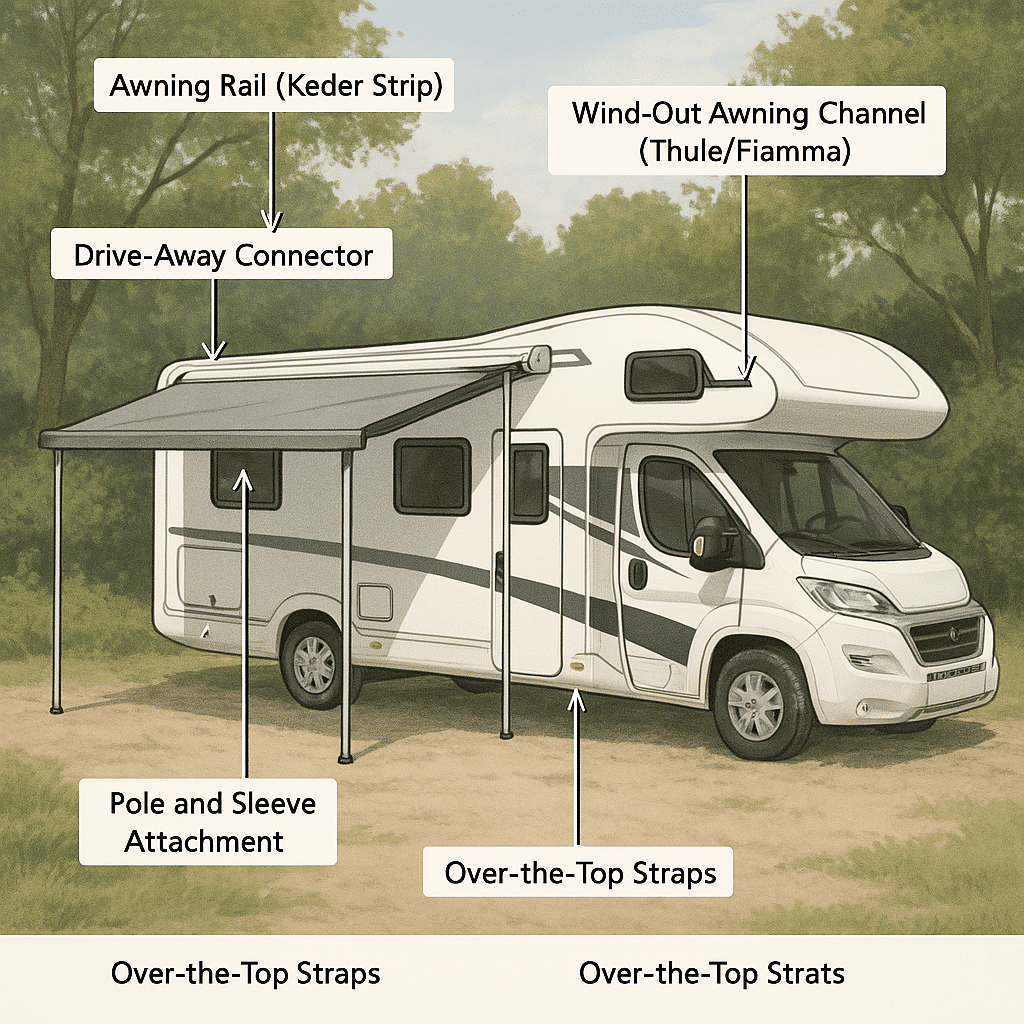
Choosing the right attachment method ensures a secure fit and ease of use. Here are the most common options:
1. Awning Rail (Keder Strip)
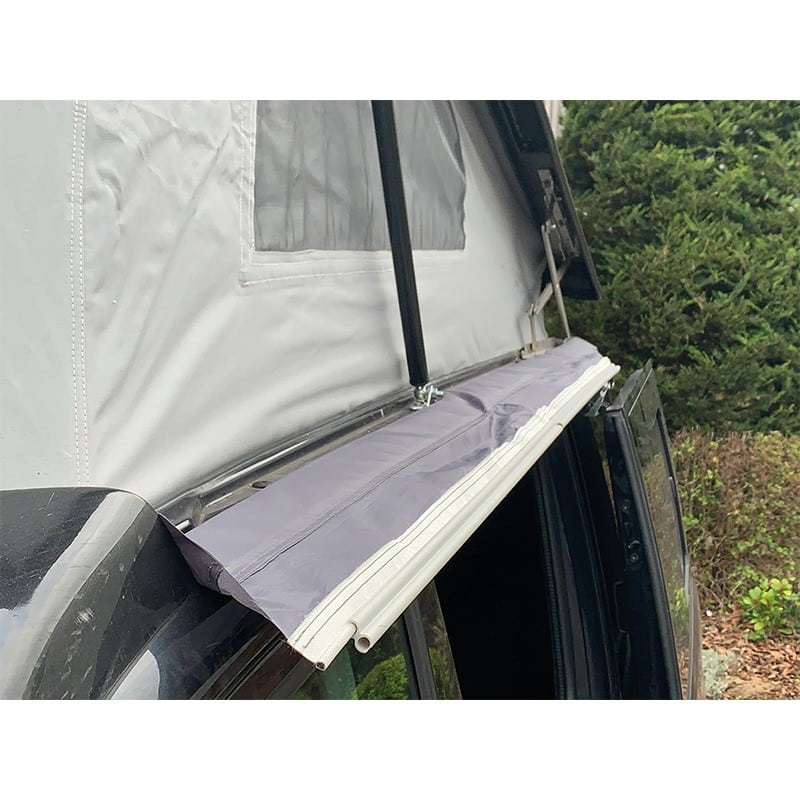
Most motorhomes come with a built-in awning rail or can have one retrofitted.
The awning’s keder strip slides into this rail, creating a tight and secure seal.
Ideal for both static and drive-away awnings.
Tip: Ensure the keder size (usually 4mm or 6mm) matches your rail.
2. Using your Wind – Out Awning (Thule, Fiamma, Dometic)
Many motorhomes are fitted with cassette-style wind-out awnings.
These have a built in awning rail channel in the front lead bar, allowing you to securely attach your awning, on the same principle as caravan awnings.
You can slide the air awning’s keder strip into this channel or use a drive-away kit with figure-of-eight strips and a keder-to-keder connector.
Important: Check compatibility with your awning’s channel and connector strip size.
3. Drive-Away Connector Kit
Used for drive-away awnings to allow easy detachment from the vehicle, enabling you to drive off without dismantling the awning.
Typically includes:
A double-sided keder strip
Figure-of-eight plastic strips
Velcro or webbing straps for added security.
4. Pole and Sleeve Attachment
A traditional method where poles are threaded through sleeves and secured to the motorhome.
Less common with modern air awnings but still used in some hybrid or budget models.
Requires careful setup to avoid damaging the motorhome’s finish.
5. Over-the-Top Straps
Ideal for motorhomes without an awning rail or when other methods aren’t feasible.
Heavy-duty webbing straps are thrown over the roof and pegged down on the opposite side.
Often used with suction cups or protective pads to prevent roof damage.
Pros:
Quick and universal
No need for permanent fixtures
Cons:
Can interfere with roof vents or solar panels
May flap in high winds if not tensioned properly.
How to Measure Your Motorhome for an Awning
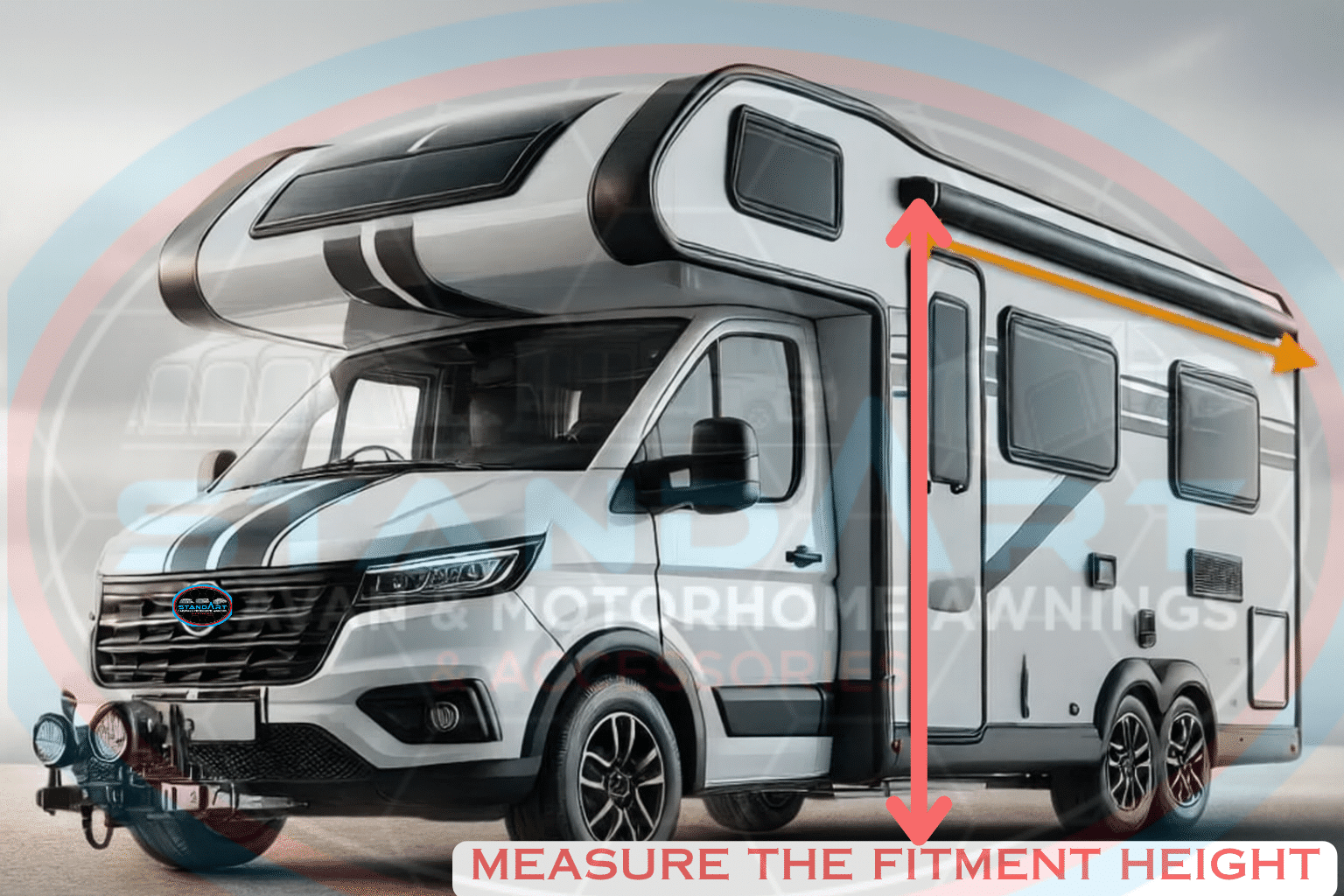
1. Measuring Fitment Height
This is the vertical distance from the ground to the awning rail or attachment point.
How to measure:
Park your motorhome on level ground.
Measure from the ground to the bottom edge of the awning rail or the attachment point (e.g., lead rail of a wind-out awning).
Take measurements at both ends of the rail to account for any slope.
Important: If you regularly use levelling blocks, your fitment height may vary. Always measure after levelling your motorhome to reflect real-world conditions. Even a small change in height can affect the awning’s fit and stability.
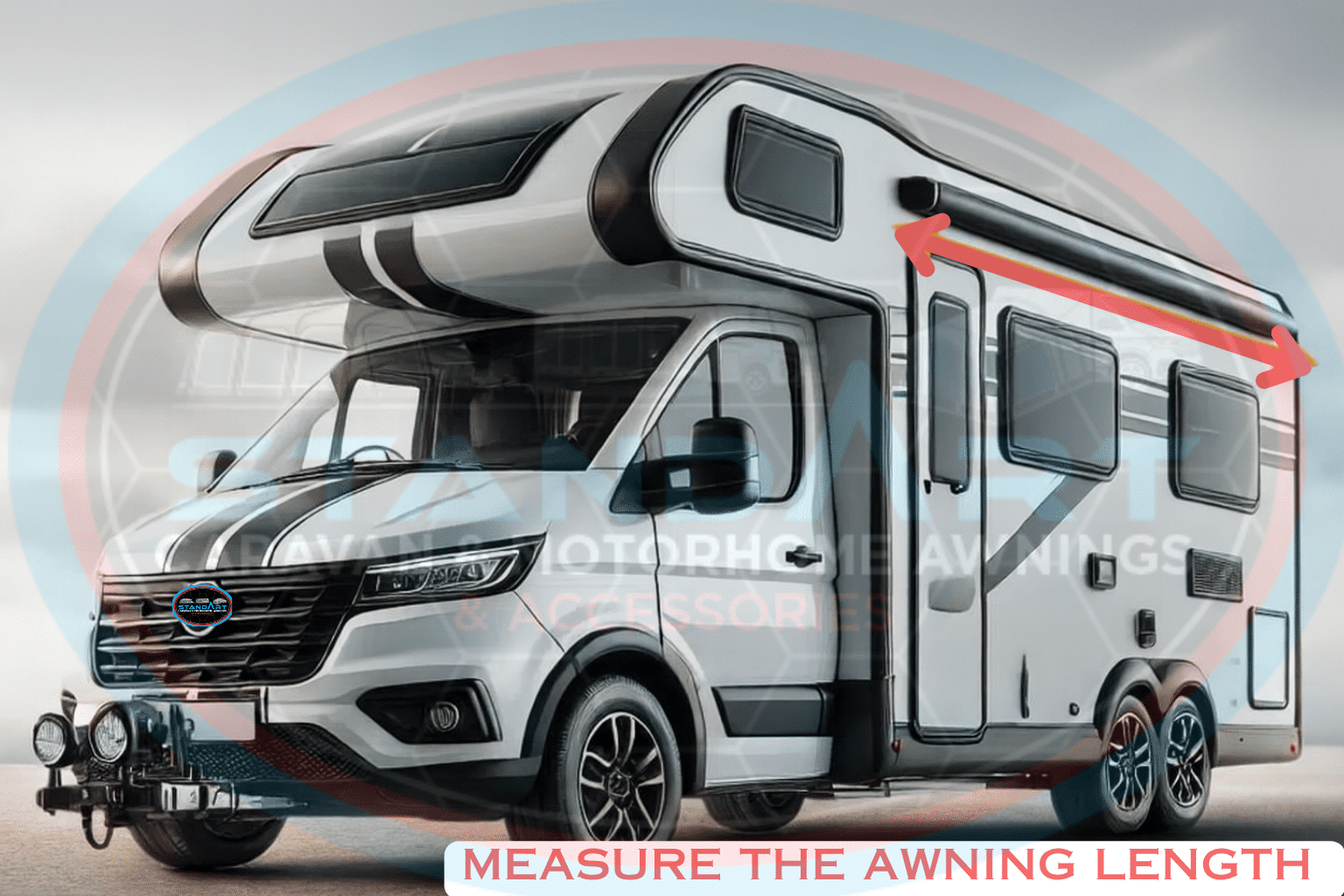
2. Measuring the Awning Rail Length
Much like the “straight awning rail measurement on caravans, This determines how wide of an awning can attach to your motorhome.
Steps:
Use a tape measure.
Measure the straight, horizontal section of the rail only.
Avoid including curved or sloped sections unless the awning is designed to accommodate them.
Tip: Some awnings require a minimum rail length (e.g., 260 cm). Always check the manufacturer’s specifications.
Positioning Your Awning Correctly
Proper positioning is just as important as accurate measurements. The side profile of your motorhome has a lot to offer: windows, door, storage units, vents… Here’s what to consider:
✅ Avoid Obstructing Storage Doors
Ensure the awning doesn’t block access to essential storage compartments or service hatches.
✅ Keep Vents Clear
Blocking fridge or heater vents can cause overheating or malfunction.
✅ Access to Doors and Windows
Make sure the awning doesn’t hinder the opening of your main door or windows.
✅ Consider the Pitch
If the ground slopes, it may affect the awning’s fit. Use levelling blocks if necessary and recheck your measurements.
In conclusion:
Selecting the correct size air awning or privacy room for your motorhome is about more than just aesthetics—it’s about functionality, fit, and enhancing your travel experience. By understanding the different types of awnings, the various attachment methods available, and how to measure your motorhome accurately (including considerations like levelling blocks and storage access), you can make an informed decision that ensures comfort and convenience on every trip. If you’re unsure where to start, need help with fitment, or want to take the hassle out of measuring and shopping for the best deal, we’re here to help. With over 35 years of combined experience both in the trade and on the campsite, we offer expert advice tailored to your setup.
Let us help you choose the best solution to maximise your outdoor space and make every adventure more enjoyable.